Project

Honua Ola Bioenergy is ready to serve Hawaiʻi Island

Honua Ola is a state-of-the-art energy facility capable of delivering up to 30 MW of renewable power to the Hawaiʻi Island grid. Located in the East Hawaiʻi town of Pepeʻekeo on industrial land, Honua Ola is equipped with an advanced operating system, the best available pollution control equipment and safety features in compliance with applicable EPA standards.

Honua Ola is nearly complete and will be powered by non-native, commercial eucalyptus crops harvested on island. The project will also generate electricity through the removal of harmful invasive plant species, such as albizia, strawberry guava and gorse.

The power plant operation will result in lower greenhouse gas emissions when compared to fossil-fuel power plants in use on the island. This result will be achieved, in part, by planting and growing trees that remove greenhouse gases from the atmosphere. The addition of up to 30 MW of renewable energy on the Hawaiʻi Island power grid will reduce the use of fossil fuel.
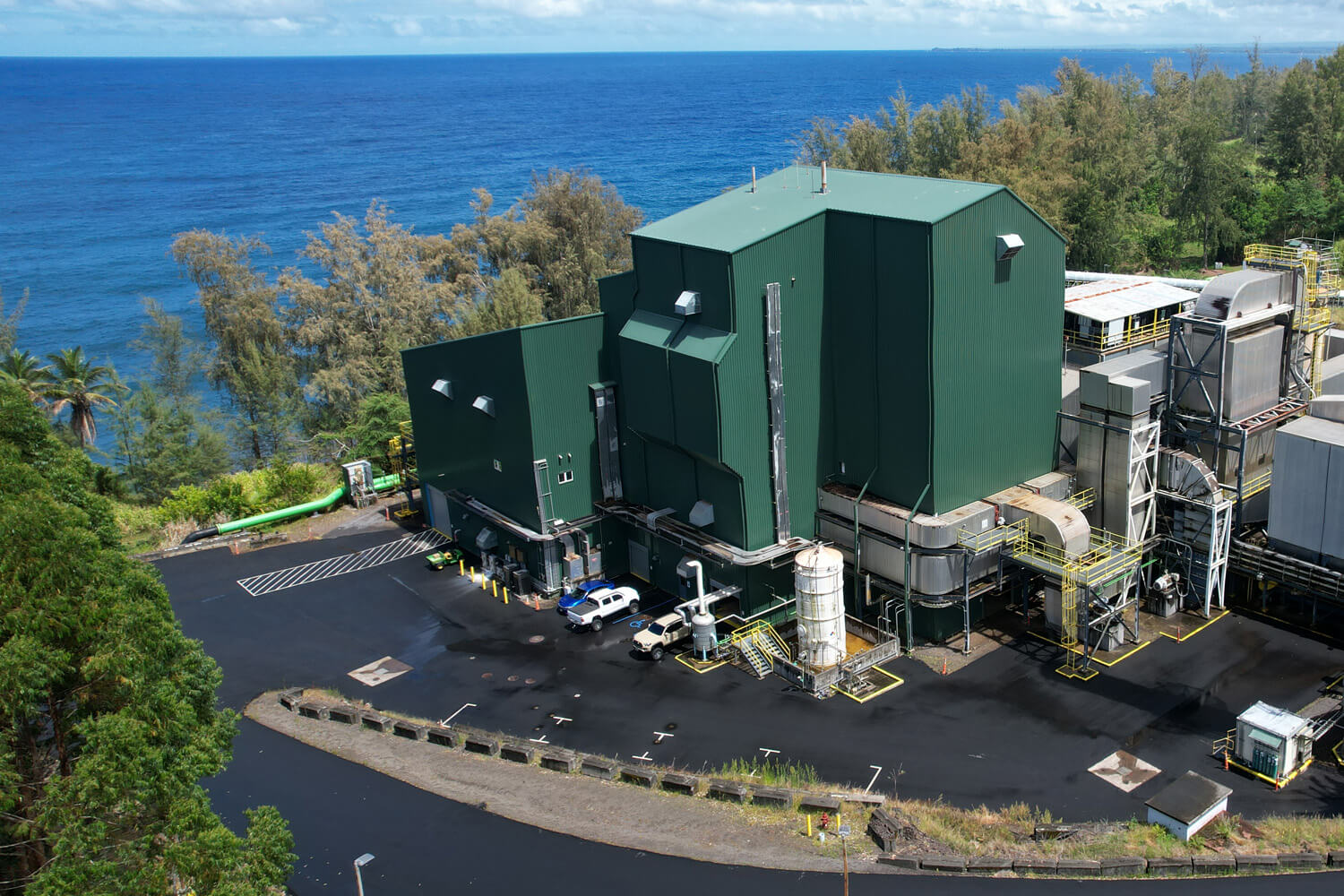
Side shot of the building with the ocean in the background.

Honua Ola Renewable Energy Cycle

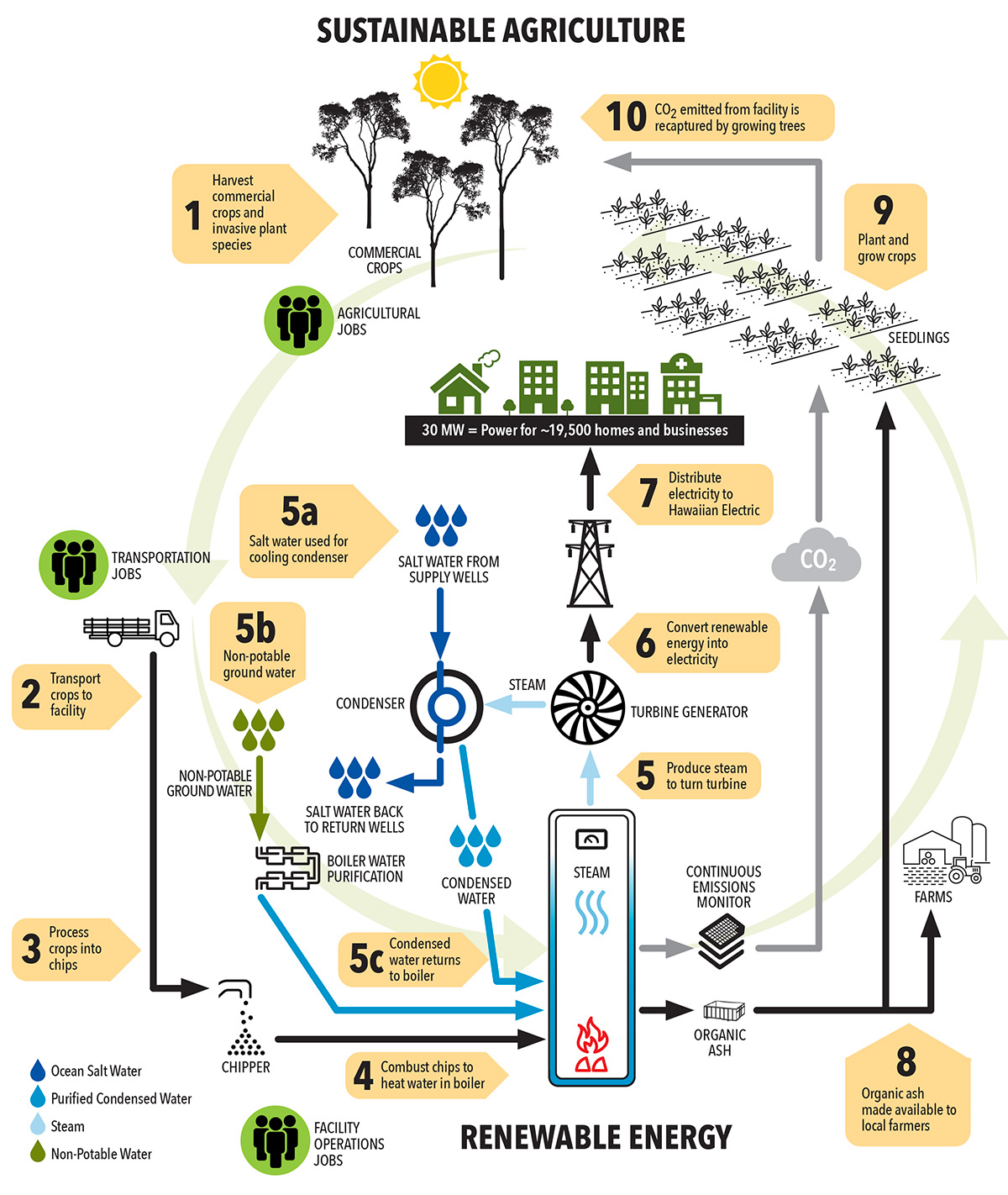
A flowchart illustrating the renewable energy production process of Honua Ola, showing how wood crops are harvested, processed, and converted into electricity while maintaining a sustainable cycle. The process starts with step (1) harvesting non-native eucalyptus and other crops from plantations, providing forestry industry jobs. (2) The harvested logs are transported to the power plant, creating transportation jobs. (3) The logs are processed into wood chips using a chipper. (4) These chips are combusted to generate heat in a boiler, supporting plant operation jobs. (5) The heat produces steam, which (6) powers a turbine-generator to convert energy into electricity. (7) The generated electricity is distributed to the utility grid, providing 30 MW of power for approximately 19,500 homes and businesses. The system includes a water cycle where (5a) well water is used for cooling, (5b) non-drinkable groundwater is used in the process, and (5c) condensed water is returned to the boiler. Emissions from combustion are controlled through an EPA-compliant emission system. (8) The remaining ash is repurposed for local farms and crop plantations. (9) The plantations are replenished with new seedlings, ensuring continuous biomass supply. (10) The CO₂ emitted from the facility is recaptured through tree regrowth, maintaining carbon neutrality. Various job opportunities across agriculture, transportation, and plant operations are highlighted throughout the process.

The above illustration shows the complex process Honua Ola will utilize to convert invasive, non-native commercial crops into renewable energy that can power 19,500 homes on Hawaiʻi Island.

Project Location

These maps and site layouts show the location of Honua Ola Bioenergy within the Pepe‘ekeo area, as set forth in the Hawaiʻi County Zoning Ordinance.

Project Location

The map shows the location of Honua Ola within the geographic area of the Pepe‘ekeo Zone, as set forth in the Hawaiʻi County Zoning Ordinance.
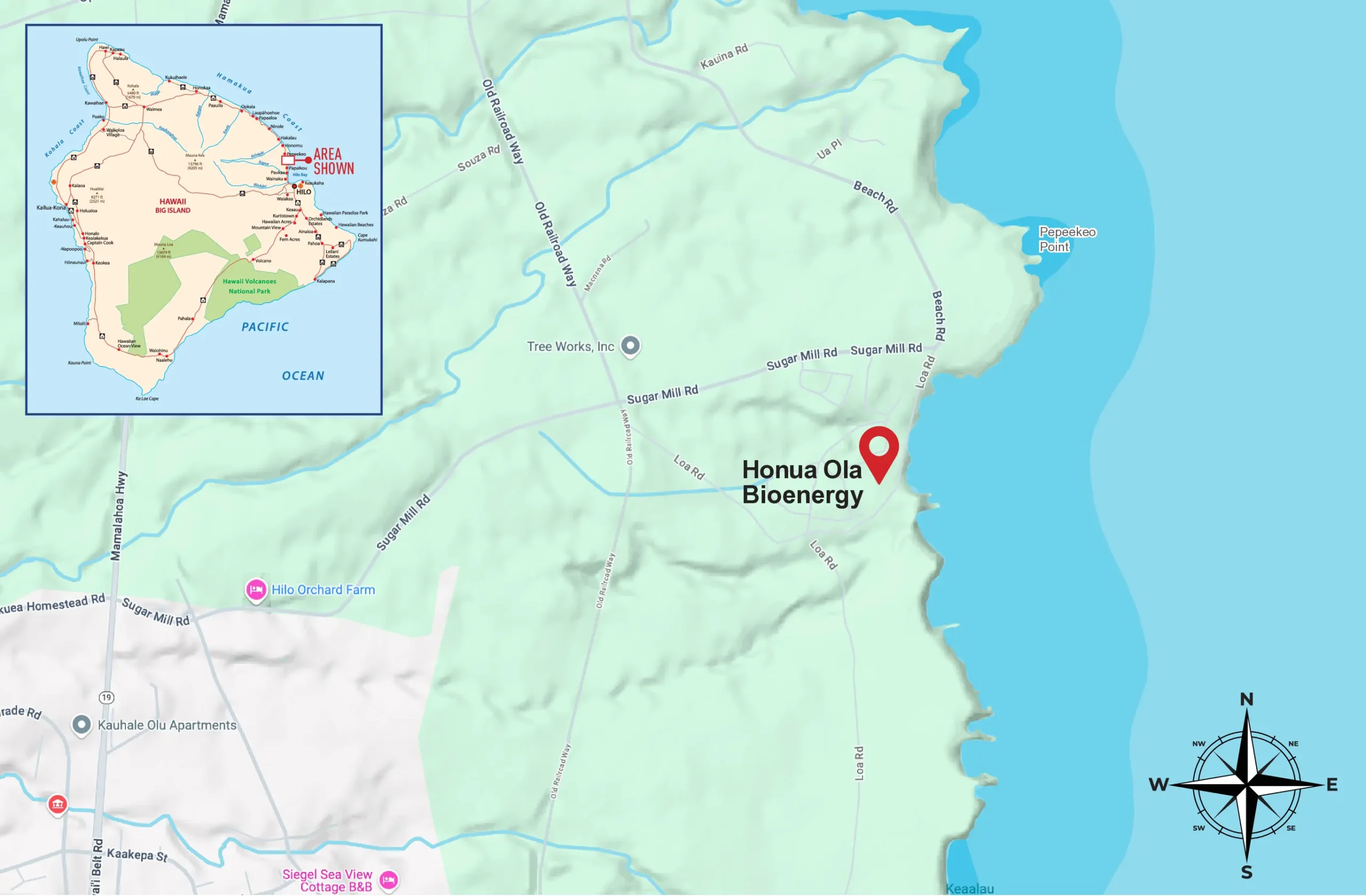
Honua Ola Bioenergy project location map

Site Layout

The plan shows the layout of Honua Ola’s facilities.
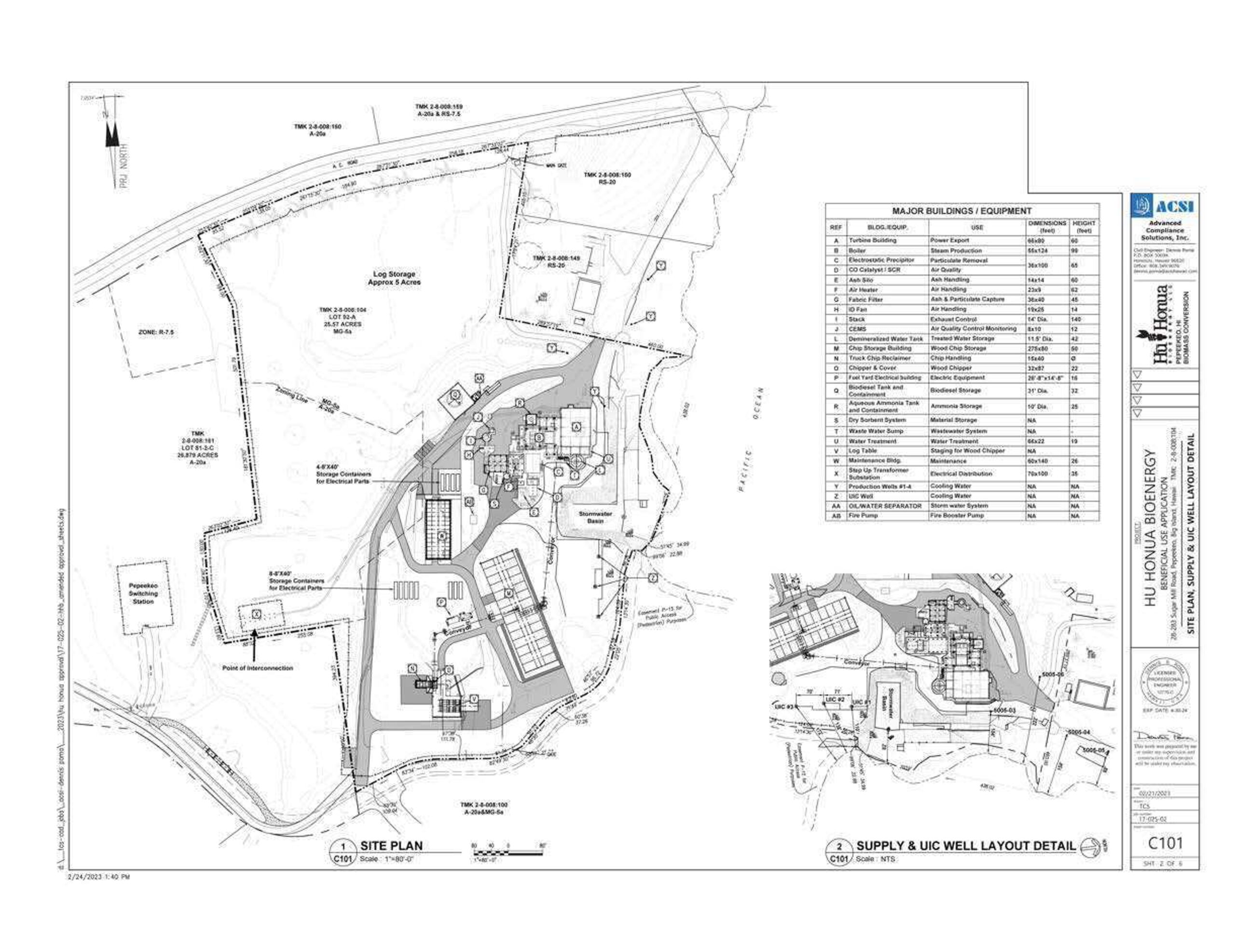
Honua Ola Bioenergy site location map

Project Interconnection Route

The plan shows the interconnection route for Honua Ola.
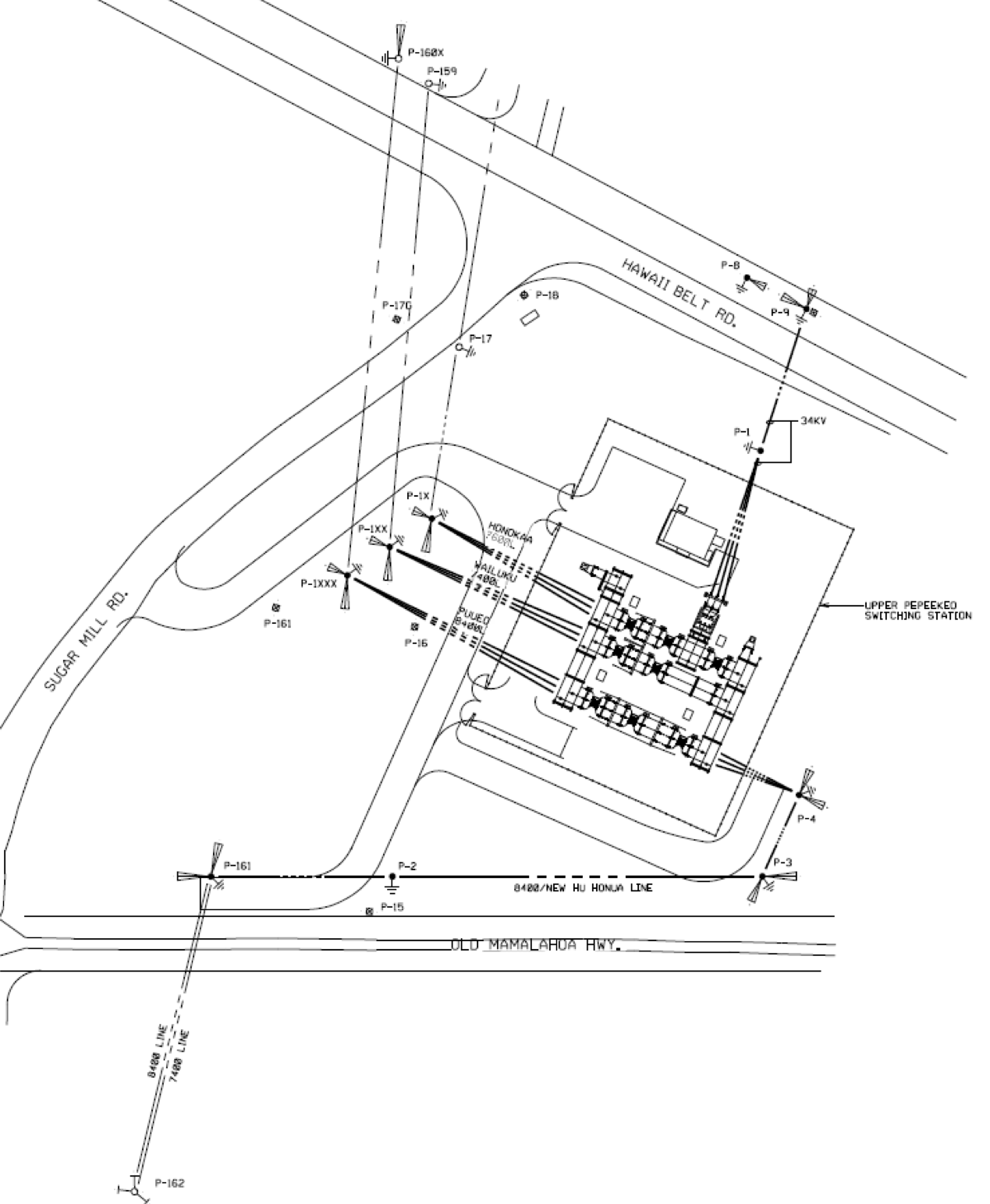
Line drawing of the Honua Ola interconnection map